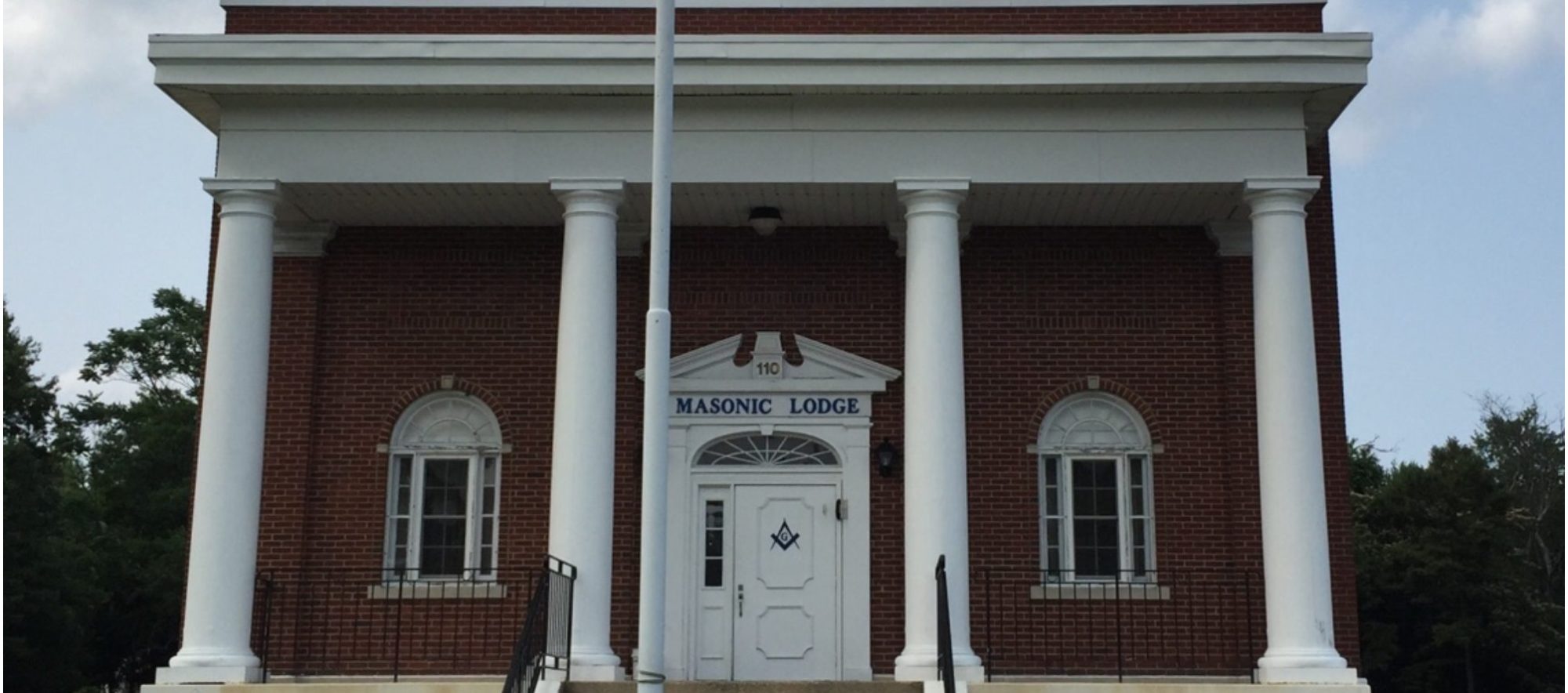
Proudly Celebrating Our
156th Anniversary
1853-2009
Regular Communications
First and Third Tuesdays at 7:30 PM
110 Route 37 W.
Toms River, NJ 08754
Lodge Office (732) 240-4835
Public Phone (732) 349-9641
"There are no Strangers here Only Friends"
Harmony Lodge #18 F&AM
Toms River NJ
Harmony Lodge #18 F.&A.M.
Toms River, NJ
Sickness and Recovery
Our prayers go out to these Brothers and Friends, May they have a quick recovery.
Grand Lodge
Kilties
York Rite
Scottish Rite
DeMolay
Eastern Star
Rainbow Girls
R.A.M
Harmony Lodge Shirts and Pins
are available now!
Shirts are $25 + shipping (Add $3 for 3x or larger).
We have two types of pins for $5.00 each + shipping.
If interested just fill out below and hit the submit button.
PERMANENT FUND: ..The Harmony Lodge
Permanent Fund continues to need your support to insure the future welfare of the lodge facilities. All donations will be gratefully appreciated.
Support our local Holly Assembly and Pledge Group
New members allways welcome
From The East
G.A.T.O.T.U.
The Masonic abbreviation G.A.T.O.T.U. meaning the Great Architect of the Universe, continues a long tradition of using an allegorical name for the Deity. G.A.T.O.T.U. means the Great Architect of the Universe. In some Masonic jurisdictions the abbreviation is considered to mean Grand Architect. Also, sometimes the abbreviation includes, at the beginning, a capital T meaning The. The abbreviation can also mean Grand or Great Artificer of the Universe. In any event, these are titles under which Freemasonry refers to Deity.
G.A.T.O.T.U. has been used by members of religious groups to attack Freemasonry. Some of these critics have claimed that this is a false god worshipped at our altar, other critics claim that
G.A.T.O.T.U. makes God seem like an abstract being. The question then becomes how did G.A.T.O.T.U. enter into Masonry? The search starts with the compass. The Indiana Monitor states in the section on the Master Mason Degree that “ The Compass is peculiarly dedicated to this degree”. What is a compass? One definitions of a compass is “an instrument for taking measurements and describing circles.” A 13th century painting in the Austrian National Library shows the Deity as The Great Architect of the Universe circumscribing Heaven and Earth. Another painting depicting the Deity using a compass is by William Blake, an English poet and artist. Blake’s painting is titled The Ancient of Days whose subject matter is the Deity using a compass.
By itself the compass has been used as an allegorical tool by which the Deity created the Universe. As a compass is a measuring device, it is logical to assume that the instrument would be used by the operative masons in the era of Cathedral building. In the Middle Ages, the terms Master Mason and Architect were used interchangeably. Architect is defined as “a master builder.” This definition also infers that a Master Mason would also be a craftsman or artificer. This leads back to the Oxford Dictionary which defines an artificer as “one who makes by art of skill; especially a craftsman.” The definition also refers “to the Artificer of the Universe; meaning the Creator”. But exactly how did G.A.T.O.T.U. come to be used in Freemasonry?
Wallace McLeod, a Canadian Masonic scholar, discusses T.G.A.O.T.U. in his book The Grand Design. McLeod states the phrase entered Freemasonry in the first Book of Constitutions of 1723 of the first premier Grand lodge of England.
John Calvin (1509-1564) was a French reformer of the Church who, at the age of 26, first published his classic work of theology in 1536. In this work, which formed the basis of theology for Presbyterian and Reformed Churches, Calvin repeatedly calls the Deity “the Architect of the Universe” and refers to His works in nature as “ Architecture of the Universe” ten times. Calvin also refers to the Deity as the Great Architect or Architect of the Universe in his Commentary on Psalm 19. In literature, art and theology the Deity has been referred to an Artificer and Architect. Thus, in using G.A.O.T.U. Freemasonary has continued a long tradition of using an allegorical name for Deity.
Donald Canetti WM
Hiram Abif’s tracing board is believed to have been made of wood, covered with a coating of wax. Each day he would draw his Master architect’s measurements and symbols into the wax in order to instruct his Master Mason’s of the work that was to be accomplished.
At the end of the day, he would simply scrape off the wax and pour a new layer of hot wax onto the board to ready it for the next day’s work.